Faro’s problem is that most people meet it at four in the morning with a boarding pass. It is the region’s only international airport, and the standard visitor relationship with the city is forty minutes in a transfer bus looking at the back of it.
Which leaves a city of more than 60,000 people — the capital of the Algarve, with a university, an old town, a marina and a lagoon on its doorstep [source: algarvetips.com] — filed under logistics.
For anyone working a winter month out here, that filing is wrong in a specific and useful way. Faro is the one town on this coast that gets better when the season ends.
The student inversion
The resort economy west of here empties in October and the towns go quiet. Faro does the opposite, because its off-season population is its actual population: the university brings students back exactly when the visitors leave, and the city is at its liveliest in autumn and winter as a result [source: algarvetips.com].
The practical effect is that the bars around the old town and the marina run year-round rather than seasonally [source: algarvetips.com], and that a Thursday in February is a real night rather than a technicality.
Nowhere else within reach of the eastern Algarve villages does that. Fuseta’s Nanobrew opens Friday to Sunday for about four hours and shuts at nine — which is the correct size for a village of 2,000 and no use whatsoever if what you want is a room with two hundred people in it.
What is actually there
Specifics, because “vibrant nightlife” is a phrase that means nothing.
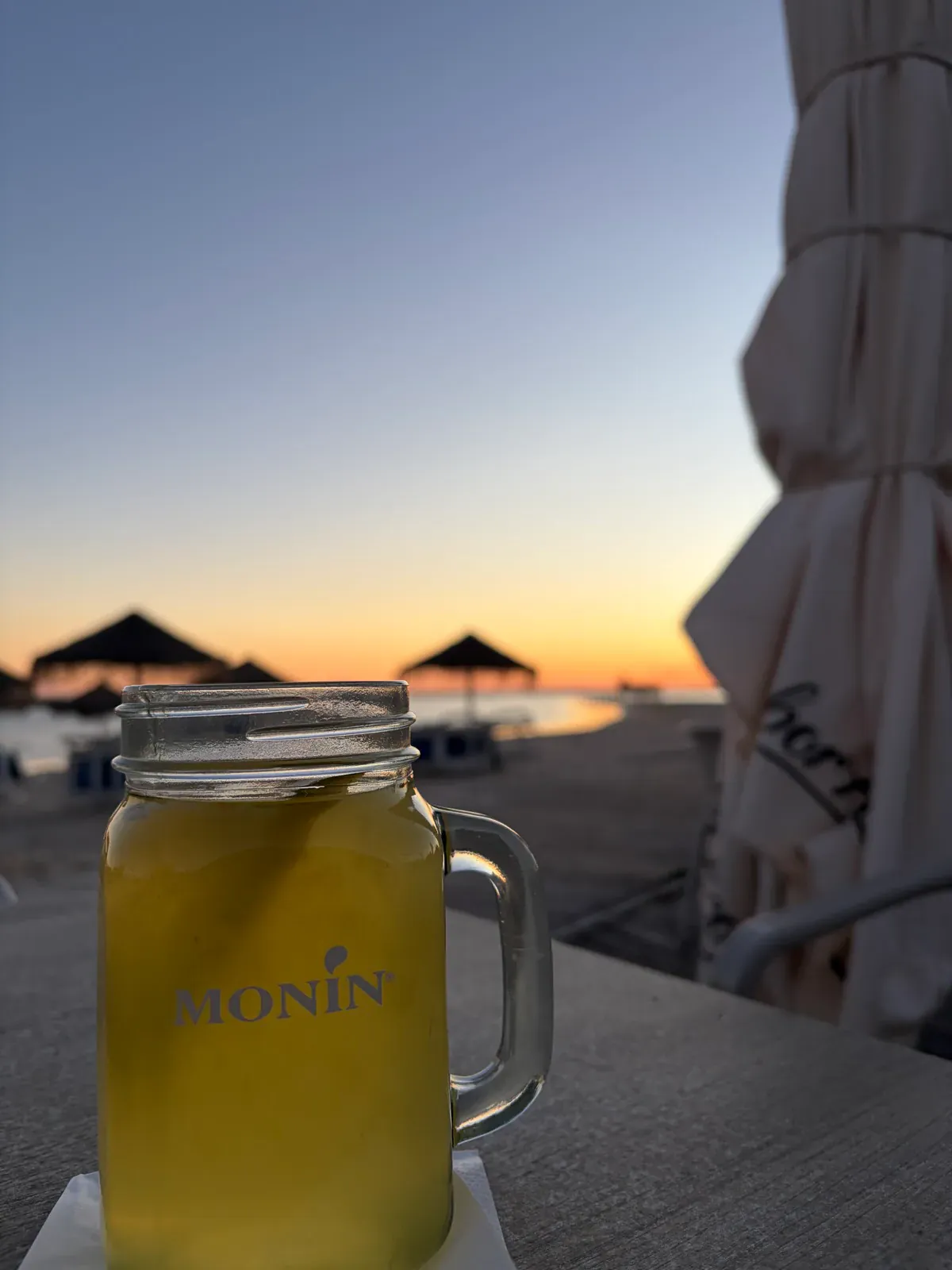
Madalena is the anchor — a bar that runs regular live jam sessions and is a weekend fixture rather than an occasional event. In’Verso does the cocktail version of the same evening. The LAB terrace is the sunset one, which in winter means about six in the evening rather than ten, and is better for it.
The most interesting thing in the city, though, is not a bar. Amar Surf Academy runs monthly neighbourhood street parties — free, with a live band, pizza from ONDA QUENTE and craft beer from Quintal das Ilhas. A free monthly street party with a proper band is the sort of thing that exists in a city with a resident young population and does not exist in a resort.
That is the whole argument in one event. Faro’s nightlife is not laid on for you. You are attending something the city was doing anyway, which is a substantially better experience than being catered to.
The daytime version is thinner, and that is fine
Faro’s old town is small and can be walked in an afternoon: the walled centre, the cathedral, the storks, a museum. It is pleasant and it is not why you would come back.
The lagoon access is more interesting — the city sits on the western end of the Ria Formosa and has its own boat traffic out to the islands — but the villages twenty minutes east do the lagoon better and more cheaply, and if you are already based out there you have no reason to import it.
So treat the daytime as a bonus attached to the evening rather than a separate trip. A late-afternoon arrival, a walk, dinner, and the thing you actually came for is a better shape than a full day.
Getting there and, more importantly, back
From the eastern villages this is a train question. The regional line runs a full winter timetable — roughly thirteen services a day each way along the coast [source: rome2rio.com] — and the station serving Fuseta and Moncarapacho sits about twenty kilometres out [source: mapcarta.com], roughly thirty-five minutes from the airport end of the line [source: casa-fuseta.com].
The constraint is the last one back, which runs close to eleven at night [source: moovitapp.com]. Eleven is late enough for dinner and drinks and early enough to end a jam session for you, and there is no meaningful bus fallback afterwards.
So a Faro night from a village base is a decision made in advance: catch the last train, or arrange to not need it. Both are fine. Discovering the timetable at half past eleven is not — and it is the single most common way an otherwise good evening here turns into an expensive one.
Worth noting for the half of the audience that gets asked: a taxi home from a night out is not an expense anybody is reimbursing, on a payroll or against an invoice. It comes out of the trip, either way.
Who this is wrong for
Anybody expecting a nightlife destination. Faro is a small university city with good bars, not a scene, and the comparison class is a mid-sized town in your own country rather than Lisbon.
Anybody planning to base here for the quiet. It is a city, with city noise and city parking, and the reason to be in the eastern Algarve in winter is mostly the opposite of that.
And anybody unwilling to go out on a weeknight. Faro’s best evenings are the ordinary ones — a Thursday jam session with forty people in the room — and the weekend version is more crowded without being better. If your working week cannot absorb a late Thursday, the city has considerably less to offer you than the villages do.