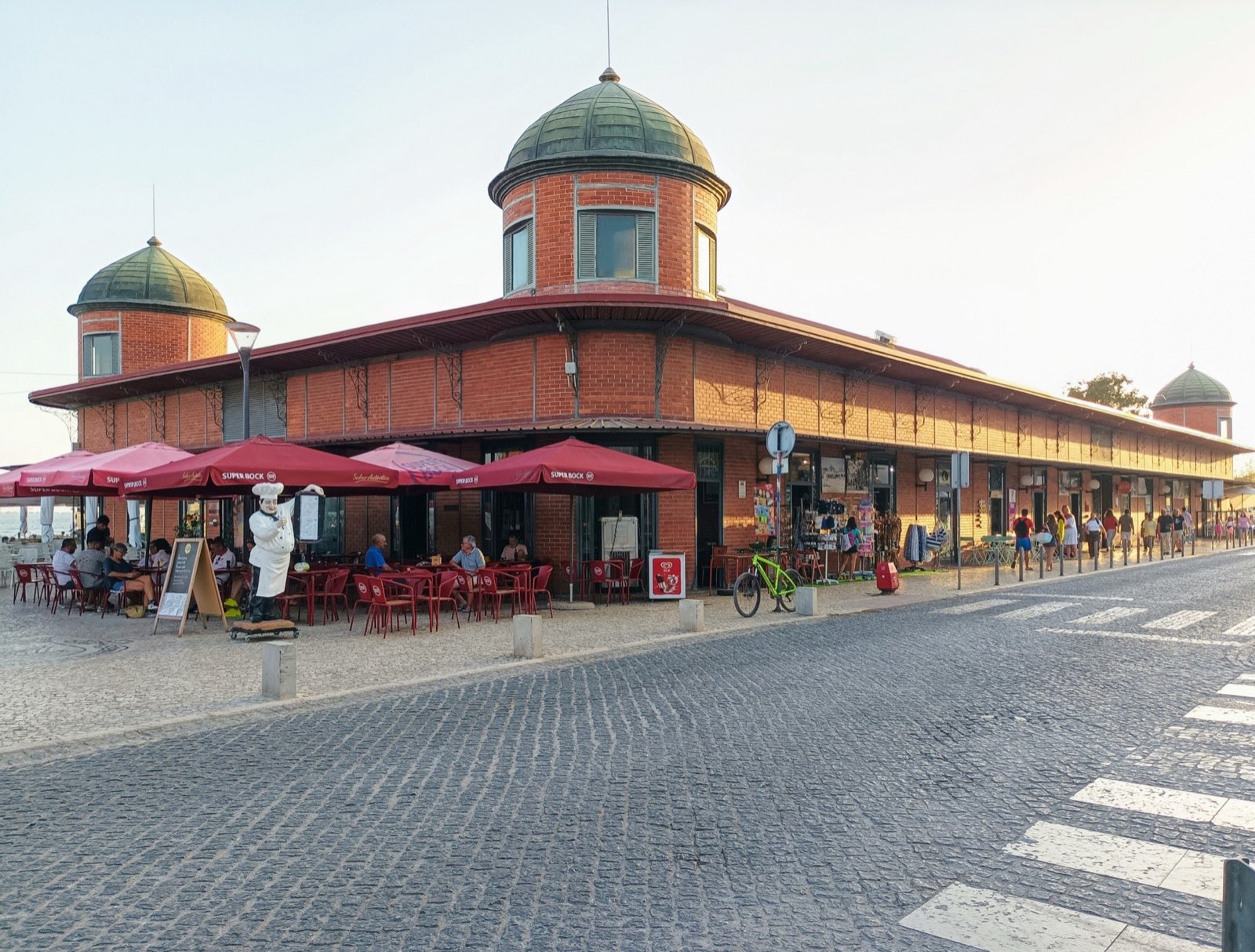

Olhão’s two red-brick market halls on the waterfront are the town’s working grocery, not just a Saturday sight. Stay a month, settle which morning is market morning and how you get into town, and they become the week’s supply line.
What do Olhão’s market halls sell?
Fish in one hall, fruit, vegetables and meat in the other. The two long halls stand side by side, each with a glazed round tower at every corner; the eastern one is the produce hall12.
They went up in the early twentieth century and were restored at the end of it, iron and glass kept as they were, with azulejo panels by the painter Costa Pinheiro added inside1. Pretty enough for a postcard, and still doing the job they were built for: selling fish to people who intend to eat it.
In the fish hall, stallholders clean and prepare your fish on the spot, for the grill or a caldeirada, the regional fish stew3. Sardines, octopus, clams and eels are the usual cast in a town of more than forty-five thousand people and the Algarve’s largest fishing port4.
The produce hall carries vegetables, fruit, meat and herbs, plus the dry staples that keep: almonds, honey, dried figs2. Those three matter if your shopping is weekly rather than daily — they sit in a cupboard until you need them.
When is the Olhão market open?
Mornings, Monday to Saturday; on Sundays the halls are shut. Fuseta’s smaller market, run by the same company, keeps seven until one5, which is a useful guide to how early “morning” starts here.
On Saturday mornings a third market sets up outdoors beside the Ria Formosa, where the municipality’s small growers sell onions, potatoes, herbs, seasonal fruit, homemade cakes and plants6. That is the market at its busiest6, and most visitors only ever see this version, which is why the market gets filed under “weekend”. For a long stay it is a bonus on top of the halls: the growers’ tables for what’s in season, the halls behind them for fish and the rest of the week.
How do you fit the market into a working week?
Give it one fixed morning. At POMAR Base my day ran gym at six, desk at nine, and the slot in between is a market run. Decide on day one which morning that is and put it in the calendar like a meeting. If your mornings are taken, make Saturday the week’s big shop and go early, before the outdoor market fills up.
How do you get there from a base outside town?
POMAR Base sits about three kilometres outside Olhão7, roughly thirty minutes on foot. My own shopping on that stay was supermarket-and-carry on foot: the walk in is easy, the walk back with bags in the summer heat is the part to plan. A bike, a short ride-hail or a housemate’s car solves it; bring a cool bag and a rucksack.
Fuseta, fifteen minutes up the road from the house, has its own municipal market selling fruit, vegetables, meat and fish from local boats, with the same morning hours5. It pairs well with an afternoon already spent there.
Why does a month change it?
A weekend visitor photographs raw fish. A month-long guest with a shared kitchen cooks it. Fish cleaned at the stall needs nothing more than a pan, and a caldeirada feeds a whole house.
That is where coliving and the market fit together. The POMAR Base kitchen took the whole house for a family dinner, and breakfast basics come with the room, so the market fills in the rest. Split a market run between housemates and it becomes that night’s shared meal rather than an errand for one.
Seasonality is the other thing a month buys. A weekend sees one day’s stalls; a month of Saturdays sees the growers’ tables change as the weeks move on.